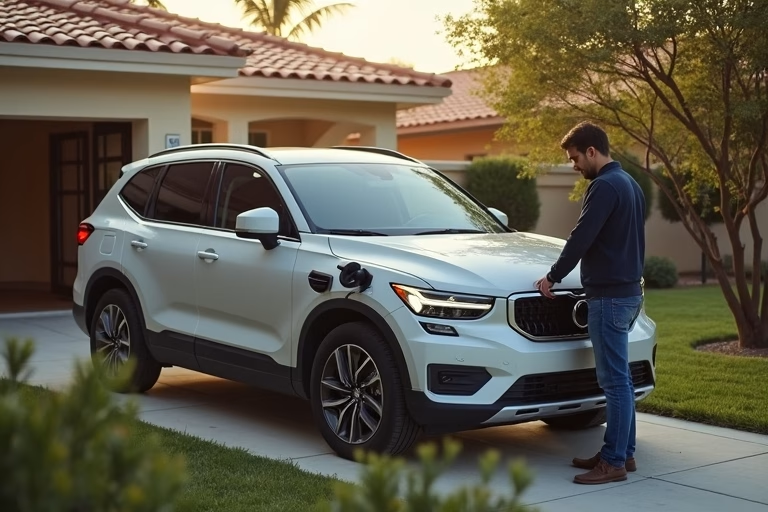
Choose an EV if home charging and predictable driving fit your routine; choose a hybrid if you want easier ownership with less charging dependence.
Charging or routine fit
The first question is not whether an EV is better in theory. It is whether it fits the way your household actually drives. If the SUV will mostly handle school runs, commuting, errands, and overnight parking at home, an EV can be a calm match. You plug in after the day ends and start most mornings with a full battery.
If your routine is less predictable, a hybrid usually asks less of you. That matters for families with shared schedules, street parking, split commutes, or days that change at short notice. A hybrid still brings electrified driving, but it does not depend on the same charging setup or planning around every trip.
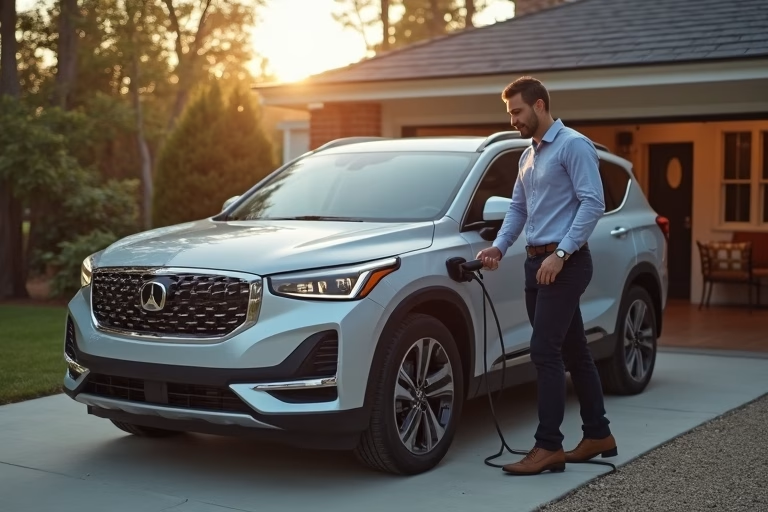
For many shoppers, the practical test is simple: can you charge at home without making it a project? If the answer is yes, an EV becomes much easier to live with. If the answer is no, a hybrid often removes the friction before it starts.
If your household parking situation is complicated, start with access, not preference. A good electrified SUV choice begins with where it will sleep, how often it moves, and whether someone has to think about charging every week.
Cost and convenience tradeoffs
People often compare EV and hybrid SUVs by price alone, but ownership is more about everyday convenience than the sticker in front of you. An EV can feel simpler once home charging is in place. You skip many fuel stops, and your daily routine may become more predictable. That is only helpful, though, if the charging setup is straightforward enough that you use it consistently.
A hybrid keeps more of the familiar rhythm. You do not need to think about plugging in every night, and long trip planning is usually more relaxed. That can matter more to a family than a narrower theoretical cost advantage. In other words, the better choice is often the one you will actually live with without small frustrations building up.
If you want a clearer read on day-to-day charging cost, use CroAuto's EV charging cost calculator before assuming an EV will be cheaper in practice. The gap between EV ownership and hybrid ownership is often about behavior, not just labels. If you still want a broader comparison, the EV vs hybrid guide can help you frame the decision without overcomplicating it.
Who this fits best
An EV SUV tends to suit families with a steady commute, home charging access, and enough parking control to make plugging in easy. It also works better for drivers who like a quieter ownership routine and do not want to plan around gas stations as often. For those households, the added charging step becomes part of the normal rhythm rather than an inconvenience.
A hybrid SUV usually suits mixed-use drivers. That includes families with irregular schedules, renters with limited charging access, and households that do frequent longer trips without wanting to think about public charging on a regular basis. It can also be the calmer choice for drivers who are interested in electrification but not ready to reorganize their routine around it.
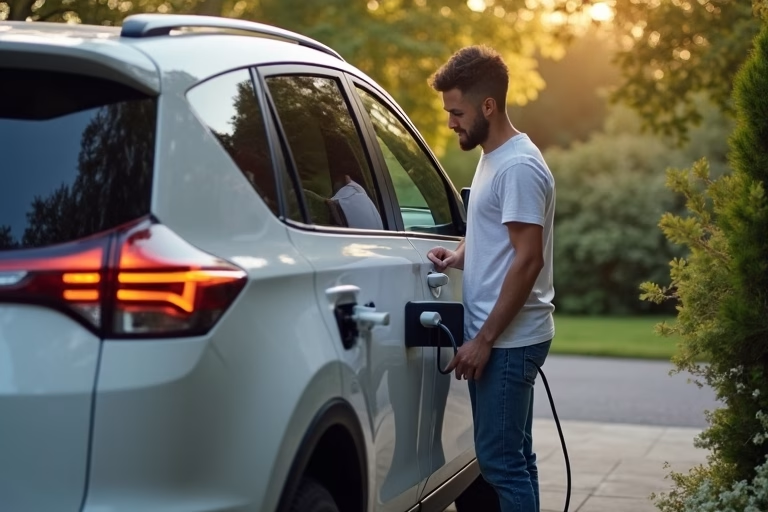
If your household is still comparing options across the rest of the market, the broader EV & hybrid guide is a useful place to step back and compare powertrain choices without rushing the decision.
Where friction shows up
The hardest parts usually appear in ordinary life, not on the spec sheet. Apartments, shared driveways, and limited overnight parking can make EV ownership less effortless than it sounds. Cold-weather habits, long holiday drives, and household schedules that change at the last minute can also make a charging-dependent routine feel heavier than expected.
That does not mean an EV is wrong. It means the fit should be tested honestly. If you can charge easily, plan without stress, and accept a little routine discipline, the EV can make sense. If you would rather avoid that extra layer of thinking, a hybrid is often the safer everyday choice.
When you are close to deciding, check the ownership side as carefully as the driving side. A small change in routine can be fine; a constant one usually is not. The calmer SUV choice is the one that fits your parking, driving, and household habits with the least negotiation.
Good next steps
Before you decide, test the choice against your routine and your home charging reality. A few minutes of planning can save a lot of second-guessing later.
- Choosing an EV without confirming that home charging is realistic.
- Assuming a hybrid is unnecessary because the fuel savings look smaller on paper.
- Ignoring how often your schedule changes during the week.
- Forgetting that apartment or street parking can change the whole ownership experience.
- Focusing on fuel type first and daily routine second.
- Not checking whether a simple charging setup would actually be used consistently.
An EV is the calmer choice when charging at home is easy and your driving pattern is predictable. A hybrid is the calmer choice when you want simpler ownership, less planning, and fewer dependencies.
The right answer is not the most advanced powertrain. It is the one that fits your routine with the least friction.
Useful tools and add-ons to compare
A few practical resources for the charging and ownership side
If you are leaning toward an EV, it can help to look at charging basics and simple home setup items before you make the final call.
Some links in this article may be affiliate links. If you buy through them, CroAuto may earn a commission at no extra cost to you. This guide is for general decision support only. Read our affiliate disclosure and editorial policy.
FAQ
Is an EV better for a family SUV?
Only if your home charging and daily routine are a good fit.
Is a hybrid easier to own?
Usually yes, because it asks less of your parking and charging setup.
What matters most when choosing between them?
Your routine, charging access, and how much convenience you want day to day.
Should I compare cost or convenience first?
Start with convenience. Cost matters, but fit usually decides whether the choice feels easy to live with.