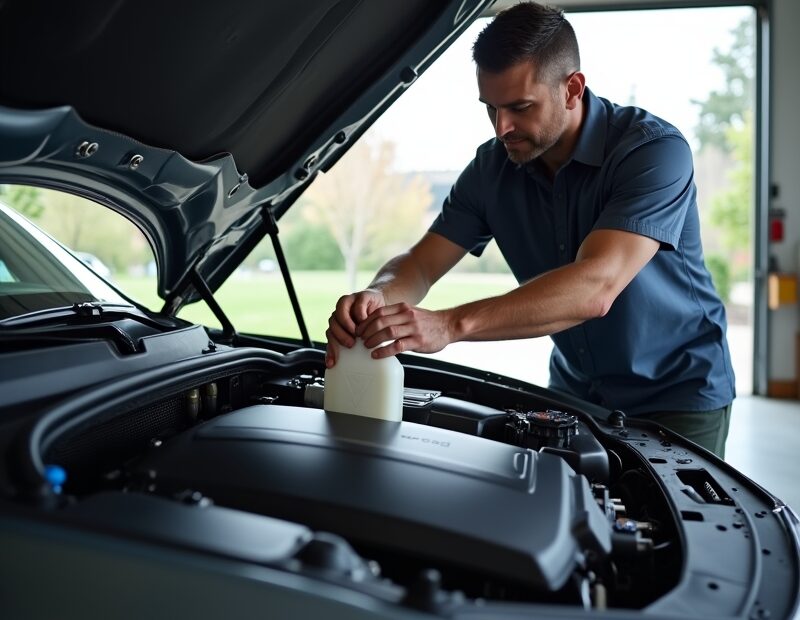
In many vehicles, coolant is replaced about every 30,000 to 100,000 miles or every 2 to 5 years, depending on the coolant type and the manufacturer’s schedule. The safest answer is to follow your owner’s manual, because using the wrong interval or wrong coolant can lead to overheating, corrosion, and higher repair costs over time.
How Often Should You Replace Coolant? In many cars, coolant needs to be replaced roughly every 30,000 to 100,000 miles or every 2 to 5 years. The exact interval depends on your vehicle, the coolant chemistry, and the manufacturer’s maintenance schedule. If you want the safest answer, check your owner’s manual or use a maintenance schedule checker before guessing.
Coolant does more than help prevent overheating. It also protects against corrosion, helps the water pump and cooling system last longer, and supports stable engine temperature in hot and cold weather. Ignore it for too long, and a routine fluid service can turn into an expensive repair.
Short answer: Replace coolant at the interval recommended by your vehicle manufacturer, commonly every 2 to 5 years or 30,000 to 100,000 miles. If you are not sure what is in the system or whether a used car has been serviced, it is smart to verify the schedule and inspect the coolant condition before assuming it is fine.
Key takeaways
- There is no single universal coolant replacement interval for every car.
- Many vehicles fall somewhere between 2 to 5 years or 30,000 to 100,000 miles.
- The owner’s manual matters more than a generic rule of thumb.
- Old coolant can lose corrosion protection even if the car seems to run normally.
- Warning signs include overheating, rusty or cloudy coolant, a sweet smell, and low coolant level.
- Using the wrong coolant type can cause long-term cooling system problems.
- If you bought a used car and service history is unclear, coolant service is often worth checking early.
What matters most when deciding coolant service intervals
If you remember only one thing, remember this: the right interval depends on the vehicle and the coolant, not just the mileage on the odometer.
Owner’s manual first
Manufacturers choose intervals based on engine design, materials in the cooling system, and the coolant formula the vehicle was built to use. Some engines are more sensitive to coolant condition than others. That is why one vehicle may call for service much earlier than another.
Coolant type matters
Different coolants use different additive packages to prevent corrosion and wear. Some are designed for shorter drain intervals, while long-life formulas can often stay in service much longer. That does not mean every modern coolant is interchangeable. Mixing or replacing with the wrong type can reduce protection.
Driving conditions still matter
Even if you stay under the mileage interval, time still counts. Coolant ages. Vehicles that sit for long periods, tow regularly, face extreme temperatures, or see hard daily use may need closer attention. The engine may not overheat right away, but aging coolant can gradually affect seals, hoses, and metal parts.
Typical coolant replacement intervals
Here is a simple way to think about it:
- Older vehicles or conventional coolant: often around every 2 years or 30,000 miles
- Many modern vehicles with long-life coolant: often around every 5 years or much higher mileage
- Used cars with unknown history: inspect first, then decide based on condition and service records
These are broad ranges, not guarantees. Some vehicles fall outside them. If your cooling system has already had repairs, has mixed coolant history, or shows contamination, the correct next step may be inspection rather than simply waiting for a mileage milestone.
How to check whether your coolant may need attention
You do not need to perform advanced mechanical work to notice basic warning signs. A quick visual check and a little awareness can help you catch issues before they become expensive.
Look at the reservoir
When the engine is fully cool, check the coolant reservoir level. If the level keeps dropping, that can point to a leak, air in the system, or another cooling system problem. Low coolant is not something to ignore just because the car still drives normally.
Check the coolant’s appearance
Healthy coolant is usually clearly colored, depending on the type. If it looks rusty, brownish, sludgy, oily, or unusually cloudy, that can suggest contamination or breakdown. The fluid should not look like dirty water.
Watch the temperature gauge
If the engine runs hotter than usual, fluctuates more than normal, or starts creeping toward hot in traffic or during hill climbs, old coolant may be part of the problem. That does not prove coolant is the only cause, but it is a warning sign worth taking seriously.
Notice odors or residue
A sweet smell around the engine bay or inside the cabin can be a clue that coolant is leaking. White crusty residue around hoses, the radiator area, or the reservoir can also suggest a slow leak.
Warning signs that should not be ignored
- Engine temperature rising above normal
- Coolant warning light or low coolant warning
- Visible leaks under the car
- Sweet smell after driving
- Rusty, dirty, or milky-looking coolant
- Frequent need to top off the reservoir
- Weak cabin heat in colder weather
If you notice these symptoms, replacing coolant may be part of the solution, but not always the full fix. Leaks, thermostat issues, radiator problems, a failing water pump, or air trapped in the system can cause similar symptoms. If you are unsure, it is smart to have the cooling system inspected by a qualified mechanic.
Why coolant service affects long-term ownership cost
Coolant replacement is usually a routine maintenance item. Engine overheating is not. That difference matters for your budget.
Fresh coolant helps protect internal passages, aluminum components, seals, the radiator, and the water pump. As coolant ages, its corrosion inhibitors weaken. That can lead to internal rust, scale buildup, and extra strain on parts that are much more expensive than a fluid service.
In practical terms, neglected coolant can increase the chance of:
- Water pump wear
- Radiator corrosion or blockage
- Heater core problems
- Hose and seal deterioration
- Overheating-related engine damage
That is why coolant belongs in the broader conversation about ownership costs. A small preventive service often costs less than the chain reaction that can follow if the cooling system is ignored.
If you are planning a long drive in summer or towing in hot weather, routine maintenance can also affect trip reliability. Before a major drive, it can help to check your broader travel budget with the Road Trip Cost Calculator and make sure your fluids are not overdue.
Who this article is best for
- Daily drivers who want a simple service interval rule without guessing
- Used car buyers trying to decide what maintenance to verify after purchase
- DIY-minded owners who want to spot warning signs without taking unsafe risks
- Budget-focused drivers trying to avoid preventable repair bills
- Road trip planners who want to reduce the chance of cooling system trouble on longer drives
If you are shopping for a used vehicle, coolant condition and service records are worth checking early. A good starting point is this used car inspection checklist, especially if the seller cannot clearly document recent maintenance.
How to choose the right next step
If you are unsure whether to replace coolant now, inspect it later, or simply monitor it, use this simple checklist.
Replace coolant soon if:
- Your owner’s manual says the interval is due
- The car is used and the service history is unclear
- The coolant looks dirty, rusty, or contaminated
- The engine has shown mild temperature concerns
- You are preparing for a demanding season or long trip
Inspect and verify first if:
- You are well below the time and mileage interval
- The coolant looks clean and the level is stable
- You recently bought the car and want to confirm what coolant type is installed
- You have conflicting repair records
Get professional help promptly if:
- The car is overheating
- The coolant level keeps dropping
- You see active leaking
- You suspect contamination or mixing of fluids
- The cooling fan, thermostat, or water pump may be involved
For most owners, the best approach is simple: verify the factory interval, check coolant condition, and do not delay if the system shows signs of trouble.
Common mistakes and myths
Myth: Coolant lasts forever
Long-life coolant lasts longer than older formulas, but not forever. Time, heat cycles, and contamination still matter.
Myth: Any coolant will do
Color alone is not a reliable way to choose coolant. Different formulas may look similar. Always confirm the correct specification in the owner’s manual or with the manufacturer or parts supplier.
Mistake: Only checking coolant after overheating happens
By the time the temperature gauge spikes, the system may already have a more serious issue. Preventive checks are cheaper and easier.
Mistake: Topping off repeatedly without finding the cause
If coolant keeps disappearing, there is usually a reason. Adding more fluid without diagnosing the loss can delay needed repairs.
Mistake: Opening the cooling system when the engine is hot
This can be dangerous. Coolant systems are pressurized when hot. Always let the engine cool fully before checking the reservoir or cap area.
Useful products and tools that can help
You do not need a garage full of equipment to stay ahead of coolant-related problems. A few practical basics can make routine checks easier and help you stay organized between services.
- Vehicle-specific coolant that matches your manufacturer’s requirements
- Clean funnels for fluid top-offs
- Gloves and shop towels for cleaner handling
- A drain pan and basic service tools if you are handling simple maintenance tasks safely
- A flashlight for checking the reservoir, hoses, and leak areas
If you want a practical place to start, you can browse useful car care essentials or see practical maintenance tools for basic fluid and inspection supplies. Just make sure anything you buy matches your vehicle’s cooling system requirements.
A practical bridge from advice to action
- Check your owner’s manual or use the Maintenance Schedule Checker.
- Inspect coolant level and appearance only when the engine is fully cool.
- Review any service records you have, especially on a used vehicle.
- If the interval is due or the fluid looks questionable, schedule service or ask a trusted shop to inspect it.
- If you are building a broader upkeep plan, explore more guides in Maintenance & Car Care.
This kind of small maintenance step is easy to overlook because the car may seem fine right now. But coolant is one of those fluids that quietly protects expensive parts in the background.
FAQ
Can I tell coolant needs replacing just by looking at it?
A visual check can help, but it is not perfect. Dirty, rusty, sludgy, or oily coolant is a warning sign, but coolant can still age even if it looks acceptable. The service interval in your owner’s manual is still the best guide.
Is coolant replacement the same as topping it off?
No. Topping off only restores fluid level. Replacing coolant removes old fluid and restores the proper chemistry and protection level. If the system is low, it is also important to figure out why.
Should I replace coolant after buying a used car?
Often, yes, or at least verify the service history right away. If records are missing or unclear, checking coolant condition and confirming the proper interval is a smart first step for peace of mind.
What happens if I use the wrong coolant?
Using the wrong coolant can reduce corrosion protection and may not be compatible with your cooling system materials. In some cases, mixing incorrect coolant types can cause long-term issues. Always confirm the correct specification before adding or replacing coolant.
Does low mileage mean I can ignore coolant service?
Not necessarily. Coolant ages with time as well as mileage. A car that is rarely driven can still need coolant replacement based on years in service.
Conclusion
For most drivers, the answer to how often you should replace coolant is simple: follow the manufacturer’s schedule, usually somewhere between 2 to 5 years or 30,000 to 100,000 miles, and pay attention to warning signs along the way. What matters most is not chasing a generic number, but matching the service interval to your specific vehicle and coolant type.
If you own a used car, drive in harsh conditions, or are unsure of the maintenance history, checking coolant sooner is usually the safer move. It is a small step that can help prevent bigger cooling system bills later.
For your next step, review your service timing with the Maintenance Schedule Checker, then if you need supplies, browse oils and fluid essentials on Amazon. You can also explore more practical upkeep guides on CroAuto and in the Maintenance & Car Care section.