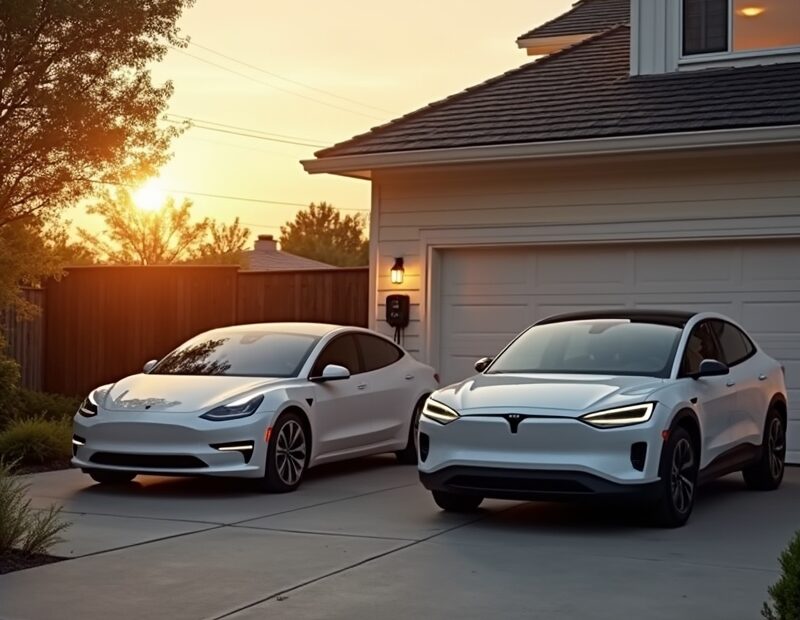
If you can charge at home or work and your daily driving is predictable, an EV often makes the most sense. If you want better fuel economy without planning around charging, a hybrid is usually the easier first step. The right choice depends on your commute, road-trip habits, budget, and comfort with charging.
Should Your First Electrified Car Be an EV or a Hybrid?
For many drivers, the best first electrified car is the one that fits real life with the least friction. In simple terms: choose an EV if you have reliable charging and mostly predictable driving, and choose a hybrid if you want lower fuel use without changing your routine much. Both can be smart. The better option depends less on hype and more on how, where, and how far you drive.
If you are still early in the process, our EV & Hybrid guides can help you understand the basics before comparing specific models.
Short answer
An EV is often the better first electrified car for drivers with home charging, shorter daily mileage, and interest in lower day-to-day running costs. A hybrid is often the safer choice for drivers who take frequent longer trips, cannot charge easily, or simply want a familiar ownership experience. Think about charging access first, then range needs, then total ownership cost.
Key takeaways
- EVs work best when you can charge at home or at work regularly.
- Hybrids are easier to live with if you do not want to depend on charging infrastructure.
- Your daily routine matters more than labels; commute length, parking, and road trips usually decide this.
- Battery health is usually a long-term concern, not an immediate one, but warranty terms and usage still matter.
- Cost should be viewed as a full ownership question, not just purchase price.
- Do not assume an EV is automatically cheaper or that a hybrid is automatically simpler; vehicle type, local energy prices, and your driving habits can change the answer.
EV vs hybrid: the basic difference
An EV runs only on electricity and must be charged. It has no gas engine to fall back on. A hybrid uses a gas engine plus an electric motor and battery, but you fuel it at a gas station like a regular car. Some hybrids recharge the battery through braking and engine operation, while plug-in hybrids also let you charge from an outlet.
For a first-time buyer, the main difference is daily routine:
- With an EV, you think about where and when to charge.
- With a hybrid, you mostly think about fuel economy and normal car ownership.
That is why this decision is less about technology and more about habits.
What matters most before you choose
If you only remember one section, make it this one. The best way to choose your first electrified car is to look at your actual week, not your ideal one.
1. Can you charge easily?
This is the biggest filtering question. If you have a garage, driveway, assigned parking spot, or dependable workplace charging, an EV becomes much easier to own. If you park on the street, move around constantly, or would rely heavily on public charging, a hybrid may be the more practical first step.
Public charging can work, especially in some cities and for some lifestyles, but it usually requires more planning. Many first-time EV owners are happiest when charging feels like part of the normal routine instead of a separate errand.
2. How far do you drive most days?
Many drivers cover modest daily mileage, which often fits an EV very well. If your commute, school runs, errands, and weekend driving are predictable, charging overnight can make ownership simple. If your schedule changes constantly or you often drive long highway distances on short notice, a hybrid may fit better.
3. How often do you road-trip?
Frequent long-distance driving can still work with an EV, but it usually means more route planning, charging stops, and more attention to weather and speed. For some drivers that is no big deal. For others, it becomes annoying quickly. A hybrid usually wins on convenience for frequent long trips because fueling is faster and more familiar.
4. What does total cost look like?
Do not stop at sticker price. Think about energy, fuel, insurance, tires, maintenance, repair risk outside warranty, and depreciation. A useful next step is to estimate your likely ownership picture with the Total Cost of Ownership Calculator. If you are leaning EV, the EV Charging Cost Calculator can help you compare electricity costs with your current fuel spending.
When an EV makes the most sense
An EV is usually a strong first electrified car when you want the biggest change in daily operating feel and have the setup to support it.
EV ownership tends to fit these drivers
- Drivers with home charging or dependable work charging
- Commuters with predictable daily mileage
- Households with a second vehicle for longer trips
- Owners who want fewer routine service items than a gas-powered vehicle often requires
- Drivers comfortable planning around charging on occasional long trips
Real-life advantages of starting with an EV
- Convenient daily use: if you charge at home, you can start most mornings with enough range for normal driving.
- Quiet and smooth driving: many drivers enjoy the calm, instant-response feel.
- Potentially lower routine running costs: in many cases, charging can cost less than buying gas, depending on local electricity rates and charging habits.
- Less routine maintenance: EVs do not need oil changes, though they still need tires, brakes, filters, and periodic inspections depending on the vehicle.
Where EV ownership can get harder
- No easy charging at home, apartment, or work
- Frequent long highway trips
- Heavy dependence on public charging
- Cold or very hot climates that can affect real-world range and charging behavior
- Buying without understanding battery warranty coverage and replacement risk
If you want to compare specific models side by side, try the Car Comparison Tool before narrowing down your list.
When a hybrid makes the most sense
A hybrid is often the easiest first electrified vehicle because it improves efficiency without requiring a new fueling routine. For many buyers, that lower-friction transition is the real selling point.
Hybrid ownership tends to fit these drivers
- Drivers who cannot charge reliably at home
- People who take frequent long trips
- Drivers who want better fuel economy with minimal lifestyle changes
- First-time electrified buyers who are not ready to plan around charging
- Households with one main vehicle that must handle everything
Real-life advantages of starting with a hybrid
- Easy transition: you fill up at gas stations as usual.
- Improved efficiency: hybrids often perform especially well in stop-and-go driving.
- Road-trip convenience: longer travel remains simple.
- Less charging anxiety: because there is no need to hunt for a charger in daily use.
Where hybrid ownership can be less appealing
- You still buy gasoline regularly
- You still have an engine and related maintenance needs
- You may not get the full EV driving experience some buyers want
- In some cases, the fuel savings may feel modest if your annual mileage is low
Charging, range, and daily practicality
For a first-time buyer, the EV decision usually comes down to one question: Will charging feel easy or annoying?
Home charging changes the equation
Home charging is often what makes EV ownership feel simple. Even if you do not need a full battery every day, regular overnight charging can cover normal commuting and errands. If your living situation makes this difficult, a hybrid becomes more attractive fast.
Public charging is useful, but not always ideal as your main plan
Public charging is getting easier in many areas, but it can still vary by location, time, speed, and cost. Some drivers do well with it; others find it inconvenient, especially if nearby chargers are busy or not part of their normal route.
Range is about margin, not bragging rights
Many first-time buyers focus too much on maximum range and not enough on real-life needs. What matters is whether the car gives you enough margin for your normal week, plus some flexibility for weather, traffic, detours, and battery use over time. If your routine already sits close to the edge of the vehicle’s usable range, you may end up frustrated.
Battery life and battery health: what first-time buyers should know
Battery concerns are common, but they are often misunderstood. In many modern electrified vehicles, battery systems are built to last for years of normal use. That does not mean all batteries age the same way or that degradation never happens. It means buyers should focus on the right questions.
What to check
- Battery warranty coverage
- Vehicle age and mileage, especially for used EVs and hybrids
- Service history when available
- Driving and charging patterns of the previous owner if buying used
- State of health information when a manufacturer or dealer provides it
What usually helps battery longevity
- Regular use instead of very long periods parked
- Moderate charging habits that match your needs
- Avoiding extreme heat exposure when possible
- Following manufacturer guidance for storage and charging
If you are shopping used, remember that battery condition can matter more than mileage alone. It is reasonable to ask the selling dealer what battery-related inspection or reporting they can provide, and to verify warranty details directly with the manufacturer.
Common myths and mistakes
Myth: An EV is always cheaper to own
Sometimes yes, sometimes no. Charging can be cheaper than gas, and maintenance can be lower in some areas, but purchase price, insurance, tire wear, public charging use, and depreciation all matter. Run the numbers instead of assuming.
Myth: Hybrids are just a compromise
Not necessarily. For many drivers, a hybrid is the right long-term answer because it balances efficiency with low hassle.
Mistake: Buying based on one road trip a year
Choose based on your normal 95% use case. If your daily life suits an EV, one or two longer trips may not be enough reason to avoid one. On the other hand, if your normal week is already logistically difficult for charging, that is a stronger signal.
Mistake: Ignoring where the car will park
Your parking setup may matter more than any brochure. Apartment parking, shared lots, or street parking can make an EV either manageable or frustrating depending on local access to charging.
Mistake: Focusing only on fuel savings
Ownership is broader than fuel. Think about time, convenience, insurance, maintenance, resale uncertainty, and how much effort you want to put into your routine.
Who this is best for
An EV is usually best for
- Homeowners or renters with reliable charging access
- Daily commuters with stable mileage
- Drivers who want a quieter, more EV-like ownership experience
- Households that can plan long trips a bit more carefully
A hybrid is usually best for
- Drivers without dependable home charging
- People who want better efficiency without changing habits
- One-car households needing maximum flexibility
- Drivers covering mixed city and highway miles with frequent longer trips
How to choose in 5 practical steps
- Map your week. Write down your typical daily miles, parking situation, and longest common trip.
- Check charging reality. If home or work charging is easy, an EV becomes much more realistic.
- Estimate running costs. Use the EV Charging Cost Calculator and Total Cost of Ownership Calculator to compare your likely monthly and yearly costs.
- Compare similar vehicles, not just powertrains. Use the Car Comparison Tool to compare size, features, and practicality.
- Think about hassle tolerance. If you want the simplest transition, a hybrid may be better. If you want to build your routine around charging and likely drive within predictable limits, an EV may suit you better.
Helpful products for first-time electrified ownership
You do not need many extras, but a few practical add-ons can make ownership smoother.
Useful accessories that can help
- Charging cable organizers and storage solutions
- Weather protection items for outdoor charging setups
- Portable tire inflators and basic emergency gear
- Trunk organizers for charging accessories and daily carry items
- Interior protection for commutes, kids, pets, or cargo
If you want to browse practical next-step items, you can check helpful EV accessories or browse vehicle shopping and automotive categories for charging-related basics and everyday car accessories.
Practical bridge from advice to action
If you are still unsure, do not jump straight to a purchase decision. First, estimate your charging costs, then compare likely ownership costs, then narrow your options by size and use case. Start with the EV & Hybrid section, use the EV Charging Cost Calculator, and then compare your finalists with the Car Comparison Tool. That process usually makes the right answer much clearer.
If budget planning is part of your decision, it is also worth reviewing broader ownership costs and related financing and insurance considerations before you buy.
FAQ
Is a hybrid better than an EV for a first-time buyer?
It depends on your routine. A hybrid is usually easier if you cannot charge reliably or take frequent long trips. An EV is often better if you have easy charging and mostly predictable daily driving.
Do I need home charging to own an EV?
No, but it often makes ownership much easier. Many first-time EV owners find that home charging is what turns the experience from manageable into convenient.
Should I worry about battery life?
Battery health matters, especially for used vehicles, but it should be viewed through warranty coverage, age, mileage, and vehicle history. Verify battery-related details with the dealer or manufacturer when possible.
Are hybrids cheaper to maintain than regular gas cars?
In some areas, they can be, but it varies by vehicle. Hybrids still have gas engines and normal wear items, so maintenance is not eliminated. The main advantage is often improved efficiency rather than a guarantee of lower repair costs.
Are EV charging costs always low?
Not always. Costs depend on local electricity rates, whether you charge mostly at home or use public fast charging, and how much you drive. That is why estimating your own usage is more useful than relying on general claims.
What is the safest way to decide between an EV and a hybrid?
Look at your parking and charging situation first, then your weekly mileage and trip patterns, then your full cost picture. If you are unsure, compare total ownership estimates before choosing.
Conclusion
Your first electrified car should make everyday driving easier, not more complicated. In many cases, an EV is the better choice when charging is simple and your mileage is predictable. A hybrid is often the better fit when convenience, flexibility, and no charging dependence matter most.
The smartest move is to match the vehicle to your habits, not the trend. If you want a practical next step, compare your likely charging and ownership costs first, then narrow your shortlist. And if you are ready to make EV ownership easier, you can explore EV charging and EV accessories on Amazon after you have the right vehicle type in mind.